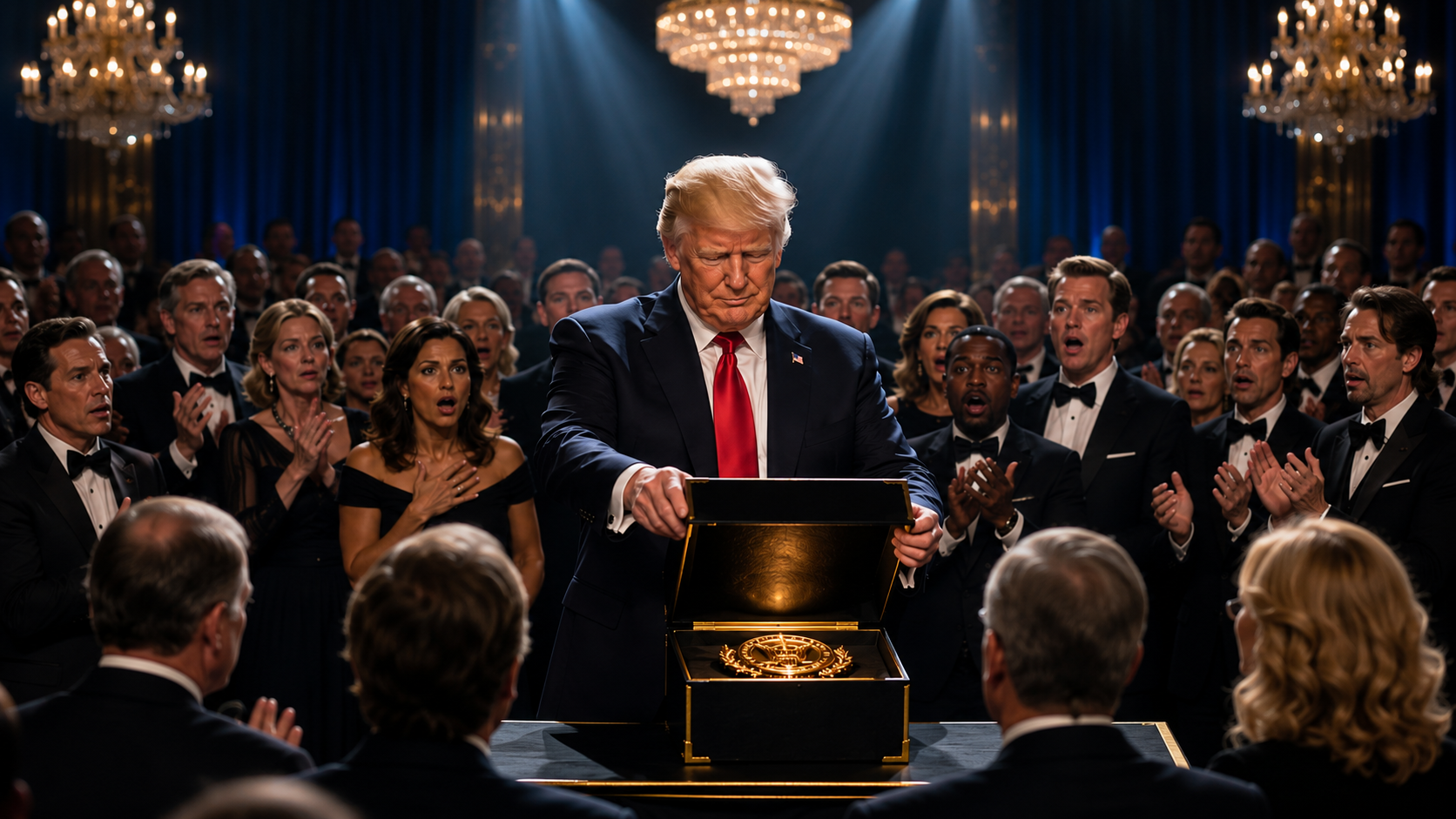
The ballroom shimmered beneath crystal chandeliers that cast golden reflections across polished marble floors. Hundreds of guests filled the grand hall, dressed in expensive suits and designer gowns, their conversations blending into a low hum of politics, business, and speculation.
It was supposed to be a celebration.
The National Leadership Excellence Ceremony had gathered some of the country’s most influential figures under one roof. Governors, senators, CEOs, journalists, military veterans, philanthropists, and international guests had all arrived for one purpose—to honor individuals who had made extraordinary contributions to American communities.
But no one was talking about the awards.
They were talking about Donald Trump.
As cameras flashed near the entrance, whispers spread through the room.
“Did he really come?”
“I heard he wasn’t even invited originally.”
“This is going to be awkward.”
“He’ll probably make the entire night about himself.”
Near the front tables, several guests exchanged amused smiles.
One television commentator leaned toward a senator.
“Five dollars says he leaves before the speeches are over.”
The senator chuckled.
“Ten says he tries to give one.”
Laughter erupted around the table.
Across the room, Donald Trump entered quietly.
Surprisingly quietly.
No entourage.
No dramatic entrance.
No announcement.
Only a dark suit, a red tie, and an expression that revealed absolutely nothing.
For a brief moment, the room fell silent.
Then conversations resumed.
The whispers became louder.
Some smiled politely.
Others didn’t bother hiding their smirks.
Trump noticed every one of them.
But he simply nodded to several veterans near the entrance and walked toward a table near the back of the room.
The back.
Not the front row everyone expected.
Not the VIP section reserved for former officials and major donors.
The back.
A young reporter frowned.
“That’s strange.”
Her editor shrugged.
“Maybe they ran out of seats.”
The ceremony began.
Awards were presented.
Speeches were given.
Videos played on giant screens celebrating acts of service and leadership.
Applause echoed repeatedly throughout the ballroom.
Trump remained silent.
Watching.
Listening.
Occasionally applauding.
Nothing more.
Then came the moment that changed everything.
The host stepped onto the stage holding an envelope.
“Our next recognition is a special one.”
The room quieted.
“This award honors an individual whose contribution has remained anonymous for nearly eight years.”
Several guests exchanged curious looks.
“The recipient requested complete privacy and refused every attempt at public recognition.”
The giant screen behind the stage illuminated.
Images appeared.
A small town destroyed by flooding.
Families standing beside ruined homes.
Children sitting in temporary shelters.
A voice narrated.
“In 2018, when devastating floods struck three states, emergency funding arrived before federal assistance could be organized.”
Pictures changed.
New homes being built.
Schools reopening.
Hospitals operating again.
“Anonymous donations funded rebuilding efforts for over 2,000 families.”
The audience watched attentively.
“Since then, the same anonymous donor has funded scholarships, veterans programs, children’s hospitals, and housing projects across America.”
The screen displayed numbers.
$15 million.
$28 million.
$46 million.
$72 million.
Gasps spread through the room.
The host smiled.
“Tonight, after years of declining recognition, the donor finally agreed to reveal their identity.”
Everyone leaned forward.
The host opened the envelope.
The smile disappeared from his face as surprise replaced it.
He looked up.
Looked down again.
Then back at the audience.
“Ladies and gentlemen…”
He paused.
“The recipient is Donald Trump.”
Silence.
Complete silence.
For several seconds, nobody moved.
Nobody breathed.
A glass slipped from someone’s hand and shattered on the floor.
Trump himself appeared almost uncomfortable.
The host laughed nervously.
“Mr. Trump… would you please join us on stage?”
Slowly, he stood.
The room watched him walk toward the podium.
Not with confidence.
Not with triumph.
With something far rarer.
Humility.
He reached the stage.
The host handed him the award.
Applause began hesitantly.
Then grew louder.
And louder.
Until eventually the entire room stood.
Everyone except a handful of critics who remained seated in stunned silence.
Trump approached the microphone.
For several moments, he said nothing.
Then he spoke.
“I didn’t want this.”
The room quieted instantly.
“I spent years refusing this award because the people who received help mattered more than the person who paid for it.”
He looked toward the audience.
“I learned something a long time ago.”
He paused.
“If you help someone only because people are watching, you’re not helping them.”
The ballroom remained silent.
“When the floods came, families needed homes. They didn’t need press conferences.”
“When veterans needed housing, they didn’t need headlines.”
“When hospitals needed equipment, they didn’t need cameras.”
His voice softened.
“They needed help.”
A woman near the front wiped tears from her eyes.
Trump continued.
“Most people here tonight probably assumed many things about me.”
Nervous laughter spread through the audience.
“Some of those assumptions might even be true.”
The crowd laughed.
“But the people we help rarely care about politics.”
“They care about whether someone showed up.”
Thunderous applause erupted.
But he wasn’t finished.
He reached into his jacket pocket and removed a folded piece of paper.
“There’s another reason I finally agreed to come tonight.”
The room quieted again.
“Eight years ago, during those floods, I received a letter.”
He unfolded the paper carefully.
“A little girl wrote it.”
He began reading.
‘Dear Mister Whoever You Are,
Mom says you helped us get our house back.
Dad says you don’t want anyone to know your name.
I think heroes don’t always wear capes.
Sometimes they just send help.
Thank you for giving me my room back.
Love,
Emma.’
The ballroom became completely silent.
Many guests lowered their eyes.
Trump folded the letter.
“I kept it.”
He smiled slightly.
“Still have it.”
The audience rose once more.
This time the applause felt different.
Real.
Not political.
Human.
But the night wasn’t over.
The host stepped forward.
“Actually, Mr. Trump…”
Trump turned.
“We have someone here who asked to attend tonight.”
The ballroom doors opened.
A young woman entered.
Perhaps nineteen years old.
Holding a small envelope.
Trump looked confused.
The host smiled.
“Emma?”
The young woman nodded.
The room gasped.
She walked slowly toward the stage.
Trump stared in disbelief.
“You wrote the letter?”
She smiled.
“You wrote back.”
He froze.
“What?”
She held up another letter.
“When my father died two years later, your office sent this.”
She opened it carefully.
‘Emma,
Your father would be proud of you.
Keep moving forward.
The world needs strong people who remember kindness.
Never lose yours.
Donald Trump.’
Several guests wiped tears from their eyes.
Emma smiled.
“I wanted to become an engineer because I wanted to rebuild things like people rebuilt our town.”
Trump looked genuinely speechless.
She continued.
“I graduated first in my class last month.”
The audience applauded.
“I start college this fall.”
Trump asked quietly,
“Scholarship?”
She smiled.
“The anonymous one.”
Laughter filled the room.
Trump laughed too.
For perhaps the first time that evening, the tension disappeared entirely.
Then another surprise arrived.
A military officer stood from one of the tables.
“Sir.”
Trump looked over.
The officer saluted.
“You helped fund rehabilitation programs for wounded veterans after I lost my leg.”
Another veteran stood.
“And my housing program.”
Another.
“And my daughter’s surgery.”
Another.
“And our community center.”
One by one, people throughout the ballroom stood.
Twenty.
Thirty.
Fifty.
The room transformed into a sea of faces connected by invisible acts of generosity nobody had known existed.
The reporter from earlier lowered her notebook.
She wasn’t writing anymore.
She was staring.
The senator who had joked earlier looked embarrassed.
The commentator avoided eye contact entirely.
Trump stood silently on stage surrounded by people whose lives had intersected with his in ways nobody had imagined.
The host spoke quietly.
“I think this ceremony just became history.”
The applause lasted nearly five minutes.
Later that evening, reporters gathered outside the ballroom.
Questions flew in every direction.
“Why keep it secret?”
“Why now?”
“Why reveal everything tonight?”
Trump stopped walking.
Turned.
And answered.
“Because people deserve second looks.”
The reporters fell silent.
He continued.
“We live in a world where everyone thinks they know everyone after thirty seconds and one headline.”
“Sometimes they’re right.”
“Sometimes they’re wrong.”
“But every person in this country is more than the worst thing said about them and more than the best thing written about them.”
No one interrupted.
He pointed toward the ballroom.
“Tonight wasn’t about changing opinions.”
“It was about reminding people that assumptions aren’t facts.”
The next morning, every major news outlet carried the story.
Some praised him.
Some criticized him.
Some debated the implications endlessly.
But one image appeared everywhere.
Not the award.
Not the speech.
Not the headlines.
The photograph showed Donald Trump standing beside Emma while both held copies of their letters.
That image spread across the country.
Schools discussed it.
Communities shared it.
Veterans organizations reposted it.
Teachers used it in classrooms.
The story evolved beyond politics.
It became something else.
A reminder.
Months later, Emma received an invitation to Washington.
She entered a conference room expecting a scholarship meeting.
Instead she found architects, engineers, and community leaders waiting for her.
Trump entered moments later.
“We’re starting something new.”
She looked confused.
“What kind of project?”
He smiled.
“A rebuilding initiative.”
She blinked.
“For disaster areas?”
“For communities that everybody forgets.”
He placed a folder on the table.
Across the front were three words.
Project Second Look.
Emma smiled.
“You named it after your speech.”
Trump nodded.
“No.”
He looked around the room.
“I named it after what the country needs.”
Over the following year, Project Second Look funded schools, clinics, libraries, and housing developments across dozens of communities.
But every project included one rule.
No plaques.
No statues.
No names.
Only results.
Journalists hated it.
They wanted stories.
They wanted ownership.
Branding.
Recognition.
They received none.
One reporter eventually asked why.
Trump answered simply.
“Buildings don’t care who paid for them.”
Three years later, Emma stood before a newly completed engineering center in Louisiana.
Students filled the auditorium.
Families gathered outside.
A banner hung above the stage.
SECOND LOOK ENGINEERING CENTER.
She approached the podium.
“I used to think heroes were people everyone recognized.”
She smiled.
“Now I think heroes are people who help when nobody is watching.”
Thunderous applause echoed through the room.
Near the back stood Donald Trump.
Not on stage.
Not at the podium.
Not in the front row.
The back.
Exactly where he had sat years earlier at the ceremony.
Emma spotted him.
She smiled.
He nodded once.
Then quietly slipped out before reporters noticed he was gone.
Years passed.
Project Second Look continued growing.
Communities rebuilt.
Scholarships expanded.
Veteran programs multiplied.
People argued endlessly over politics, elections, and headlines.
But somewhere beneath all of it remained a lesson from one unexpected evening.
A lesson that spread far beyond a ballroom.
People remember moments when expectations collapse.
When assumptions break.
When strangers become human again.
And whenever Emma spoke to students, she ended with the same sentence.
“The world changes when we stop deciding who people are before we’ve seen everything they can become.”
Because on one unforgettable night, during one ordinary ceremony, a room full of powerful people laughed at a man they believed they already understood.
Until he revealed a truth no one expected.
And in doing so, reminded everyone else of a truth they had forgotten.
Every person has chapters the world has never read.
Sometimes the greatest stories are the ones no one sees being written.
And sometimes…
the quietest person in the room is carrying the loudest truth of all.
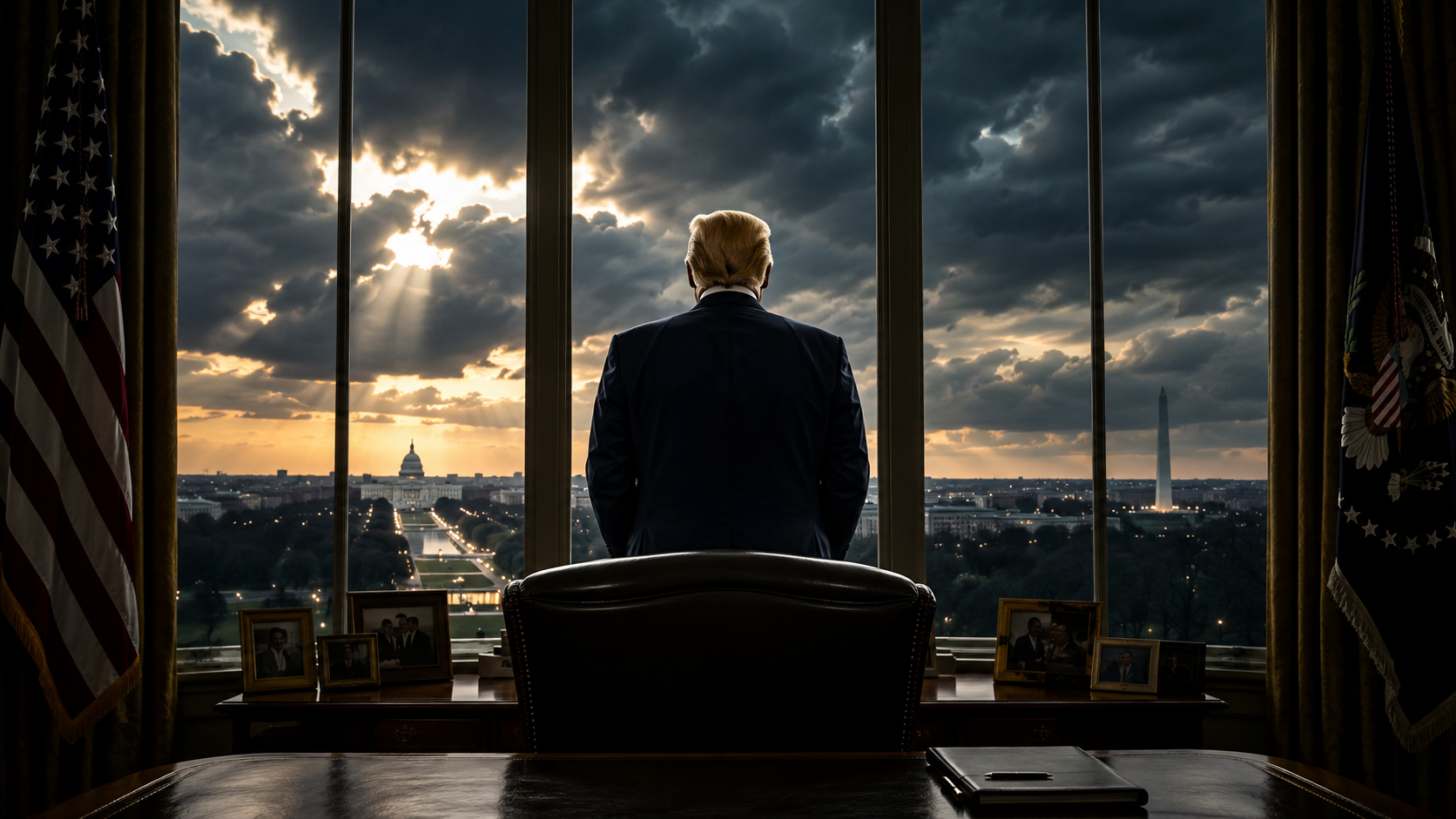
PART 2: Project Second Look — The Final Secret
Five years after that unforgettable ceremony, Project Second Look had become something no one could have imagined.
Entire neighborhoods had been rebuilt.
Schools once abandoned were now filled with students.
Veterans who had once slept in shelters now owned homes.
Small towns destroyed by storms had returned stronger than before.
Yet one mystery remained.
No one knew where most of the funding came from.
Journalists had tried.
Financial experts had investigated.
Political analysts had debated endlessly on television.
But the answer never came.
Every donation passed through independent foundations and private trusts.
There were no interviews.
No documentaries.
No fundraising galas.
Only results.
Emma Whitmore, now one of America’s youngest infrastructure engineers, stood on the stage of the newly completed National Renewal Summit in Washington.
More than three thousand people filled the auditorium.
Governors.
Business leaders.
Military veterans.
Students.
Families whose lives had been changed by Project Second Look.
Large screens displayed photographs from hundreds of completed projects across the country.
Applause echoed throughout the hall.
Emma smiled.
“This project taught us something important.”
The audience grew quiet.
“Communities do not need pity.”
She paused.
“They need opportunity.”
Thunderous applause followed.
Then the host walked onto the stage holding a sealed envelope.
His expression looked strangely serious.
“Ladies and gentlemen…”
He looked toward Emma.
“Before tonight concludes, there is one final message that was requested to be delivered exactly five years after the original ceremony.”
The room became silent.
The host continued.
“The instructions stated that this envelope could only be opened tonight.”
Whispers spread across the auditorium.
Emma frowned.
She had never heard of any message.
Neither had the board members of Project Second Look.
The host slowly opened the envelope.
Inside was a handwritten letter.
He unfolded it carefully.
The room waited.
Then he began reading.
“If you are hearing this message, it means Project Second Look survived long enough to no longer need the people who started it.”
The audience listened carefully.
“The goal was never to build buildings.”
“It was never about awards.”
“It was never about headlines.”
“It was always about proving that kindness can survive politics, disagreement, and division.”
Emma stared at the stage.
The handwriting looked familiar.
The host continued reading.
“Many people spent years trying to discover who created Project Second Look.”
The room held its breath.
“The truth is that there was never one founder.”
Confused murmurs spread through the crowd.
The host looked up.
“There were 217 of them.”
The audience erupted with surprise.
The screen behind the stage suddenly changed.
Names began appearing.
Veterans.
Teachers.
Business owners.
Firefighters.
Doctors.
Construction workers.
Former scholarship recipients.
Flood survivors.
Military families.
Every one of them had secretly donated time, money, expertise, or resources to continue the project.
Some gave thousands of dollars.
Some gave millions.
Some gave weekends building homes.
Others gave years of their lives mentoring children.
The audience watched in stunned silence.
The host read the next line.
“Second Look was never meant to belong to one person.”
“It belonged to every person who refused to walk away when someone needed help.”
Emma felt tears forming.
Then the final paragraph appeared on the screen.
“If people remember one thing, let it be this:”
“Never underestimate what ordinary people can accomplish when they stop asking who deserves help and simply decide to help.”
The signature appeared beneath the words.
Donald J. Trump.
The room stood instantly.
Not because of politics.
Not because of titles.
But because everyone understood something important.
The greatest secret of Project Second Look had never been money.
It had never been power.
The secret was that generosity spreads.
One act becomes two.
Two become twenty.
Twenty become thousands.
Emma stepped toward the microphone.
For several moments she said nothing.
Then she smiled.
“When I was eleven years old, someone rebuilt my home.”
She looked around the auditorium.
“Tonight I finally understand what they were really building.”
The audience listened quietly.
“They were building us.”
Silence filled the room.
A beautiful kind of silence.
The kind that only appears when people realize they are part of something larger than themselves.
Suddenly one of the veterans from the original ceremony stood.
Then another.
Then another.
Soon hundreds of people throughout the auditorium rose to their feet.
Not to honor a politician.
Not to honor a project.
But to honor an idea.
An idea that had outlived criticism, headlines, and arguments.
An idea that would continue long after every speech had been forgotten.
Outside, reporters waited for a statement.
Emma eventually stepped before the cameras.
A journalist asked the question everyone wanted answered.
“What happens to Project Second Look now?”
Emma smiled.
“The same thing that always happened.”
The reporter looked confused.
“What do you mean?”
She looked toward the crowd leaving the summit.
“It belongs to whoever decides to continue it.”
The next morning, thousands of applications arrived from volunteers across the country.
Architects offered designs.
Builders offered labor.
Teachers offered tutoring.
Retired veterans offered mentorship.
Doctors volunteered for rural clinics.
The project no longer needed founders.
It had become a movement.
Years later, a small plaque was quietly installed inside the first community center ever built by Project Second Look.
Unlike most memorials, it contained no names.
Only a single sentence:
“Every person deserves a second look.”
Children passed it every day without knowing the story behind it.
Perhaps that was exactly how it was supposed to be.
Because the greatest legacies are rarely the loudest ones.
They are the ones that continue working long after the people who started them are gone.
And somewhere, in a rebuilt town that once stood underwater, a young girl read those words aloud to her younger brother.
He looked up and asked,
“Who wrote that?”
She smiled.
“Someone who believed people could be better than they were yesterday.”
The boy thought for a moment.
Then he nodded.
“I think they’re right.”
The sun began to set over the town.
Children played in parks that once did not exist.
Families walked streets that had once been destroyed.
Lights glowed from homes that had once been lost.
And without speeches, cameras, or ceremonies, Project Second Look quietly continued doing what it had always done.
Giving people another chance.
Giving communities another beginning.
Giving strangers a reason to believe in each other again.
Because sometimes the most powerful secrets are not hidden in vaults or locked rooms.
Sometimes they live quietly inside ordinary acts of kindness.
Waiting for someone else to continue the story.
THE END