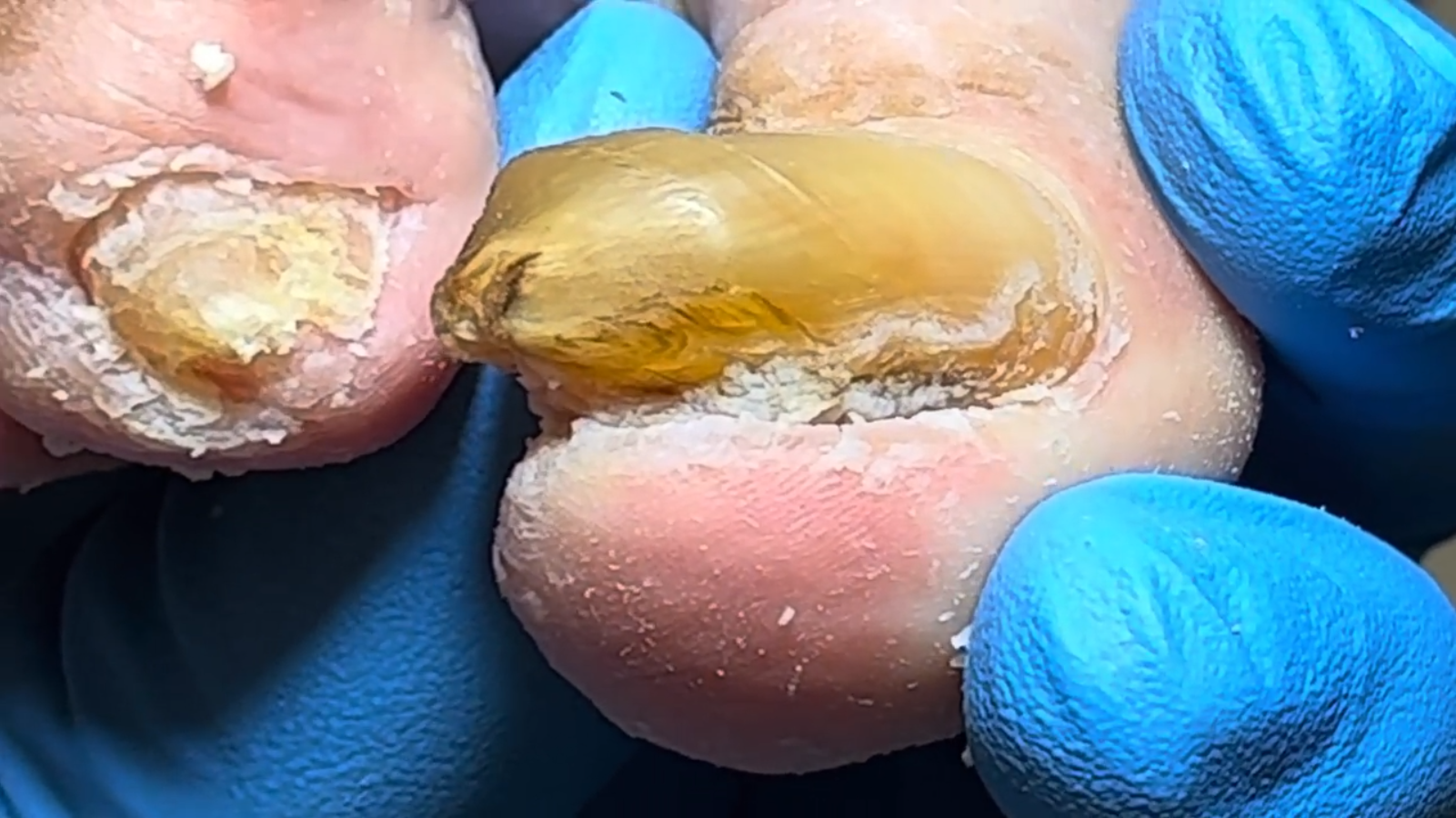
The full treatment process is shown in the video below. Scroll down to watch the complete video and learn about common treatment options.
Thick, yellow, brown, or distorted toenails can be uncomfortable and difficult to manage. In some cases, these changes may be associated with a fungal nail infection, repeated injury, aging, or other nail conditions. However, appearance alone cannot confirm the exact cause, so persistent or severe nail changes should be evaluated by a qualified healthcare professional.
In the full video, you can watch the step-by-step care process as the thickened nail is carefully managed. Professional nail reduction or debridement may help reduce excessive thickness and discomfort, but it does not necessarily treat the underlying cause by itself.
How Are Thick or Fungal Toenails Treated?
Treatment depends on the cause and severity. A healthcare professional may recommend trimming or reducing a very thick nail, prescription or nonprescription topical antifungal treatment for some cases, or oral antifungal medication for certain confirmed fungal infections. Treatment can take months because a healthy toenail must gradually grow out.
To help prevent recurrence, keep the feet clean and dry, change socks regularly, avoid sharing nail tools, disinfect grooming equipment, and wear appropriate footwear in communal wet areas.
▶️ WATCH THE FULL VIDEO BELOW TO SEE THE COMPLETE PROCESS
Important: Do not aggressively cut, pull, or remove a severely thickened nail at home. People with diabetes, poor circulation, reduced sensation in the feet, pain, swelling, redness, drainage, or signs of infection should seek professional medical or podiatric care.
Medical Disclaimer: This content is provided for educational and informational purposes only. It is not a diagnosis or a substitute for professional medical advice, examination, or treatment. Always consult a qualified healthcare professional for concerns about your nails or feet.