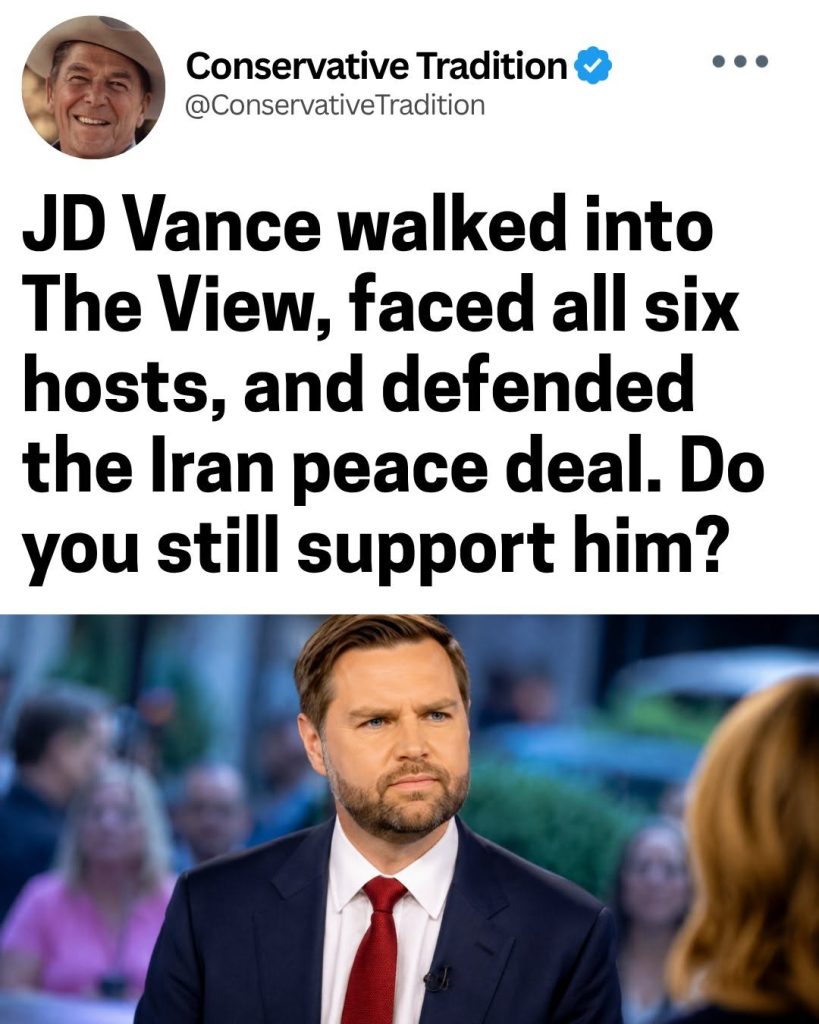
Vice President JD Vance walked straight into one of the most hostile environments any conservative politician could face: the set of The View. Sitting across from six hosts, including longtime critics Whoopi Goldberg and Joy Behar, he knew exactly what he was walking into. There were no friendly interviews, no easy questions, and no guarantees that he would leave with favorable headlines. Yet he showed up anyway.
The discussion quickly turned to the newly announced Iran peace deal, an agreement Vance played a major role in helping negotiate. As expected, the panel challenged him from multiple angles, questioning both the policy and the administration’s approach. The conversation was tense, the disagreements were obvious, and the hosts pushed back repeatedly. But throughout the exchange, Vance remained composed, defended his position, and refused to back away from the debate.
Whether you agree with him or disagree with him, one thing is difficult to deny: it takes confidence to walk into a room where you know most of the audience, hosts, and commentators are likely against you. Many politicians prefer friendly interviews where they can avoid criticism and speak only to supporters. Vance chose a different route. He sat down with people who openly disagree with him and answered their questions face-to-face.
Supporters argue that this is exactly what leadership should look like. They believe elected officials should be willing to defend their ideas in front of critics, not just supporters. They point out that democracy works best when leaders are willing to engage in difficult conversations, explain their decisions, and stand behind their policies even when facing tough opposition.
Critics may disagree with Vance’s positions, his policies, or his role in the administration. That’s their right. But many Americans respect the willingness to enter a challenging environment and make the case directly to the public rather than avoiding scrutiny altogether.
In today’s political climate, genuine debate has become increasingly rare. Too often, people stay inside their own political bubbles, only listening to voices that already agree with them. Moments like this remind people what open discussion looks like: competing viewpoints, tough questions, and leaders willing to defend their record in public.
For supporters, Vance’s appearance wasn’t just about one interview or one policy. It was about demonstrating resilience under pressure. They see a leader who didn’t back down, didn’t lose his composure, and didn’t allow a hostile atmosphere to dictate the conversation. Instead, he stayed focused on explaining his position and making his case to the American people.
Love him or hate him, agree with him or disagree with him, it takes a certain level of determination to walk into the lion’s den and stand your ground. Many viewers saw a politician willing to face criticism head-on rather than hide from it. Others saw a leader defending what he believes is in the best interest of the country, regardless of how unpopular it may be with his critics.
The bigger question now is whether Americans value leaders who are willing to engage with their opponents directly. In a time when political divisions seem deeper than ever, appearances like this spark an important conversation about leadership, accountability, and the ability to stand firm under pressure.
What do you think? Did JD Vance prove he has the backbone and confidence needed to represent the nation on the biggest stages, or did the interview change your opinion of him? Share your thoughts below.